On the cost side, staples like beef, coffee, eggs, and cacao have climbed greatly, with food costs up 21 % over four years– outmatching broader wholesale inflation. Slim margins (3– 5 %) leave little room for error, and tolls from President Trump’s profession war danger pressing costs higher still. Labor costs and shortages compound the strain, as numerous dining establishments struggle to discover certified candidates and must consider increasing earnings to compete. Migration crackdowns have additionally tightened up the labor force.
Obtain the clearest, most exact view of the truckload marketplace with data from DAT intelligence.
https://www.youtube.com/watch?v=videoseries
Tune into DAT intelligence Live, live on YouTube or LinkedIn , 10 am ET every Tuesday.
On the demand side, diners are dining in a restaurant less, resulting in one of the weakest six-month development periods for restaurant and bar sales in a decade. Low-income houses– already worried by years of high rising cost of living– are trading down to more affordable menu things or food preparation at home, and currently middle-income houses are feeling the pinch also. Customers are being extra value-conscious, unwilling to accept higher prices unless they match viewed quality. Grocery buying patterns echo this care, with individuals acquiring smaller sized amounts, moving to keep brand names, and skipping non-essentials. While some markets like New York City see durable dining establishment web traffic, a lot of the country deals with depressed volumes and an increasingly careful customer base.
The National Restaurant Organization’s Restaurant Efficiency Index ( RPI , which is a regular monthly composite index that tracks the wellness of the U.S. restaurant sector, held fairly steady in June, as restaurant operators continued to report blended sales and traffic outcomes. Restaurant operators reported somewhat softer same-store sales in June, after a bulk registered greater sales in May. Looking in advance, dining establishment drivers are very carefully positive concerning sales gains in the coming months. However, their expectation for the total economic situation remains to lean unfavorable.
Load-to-Truck Proportion
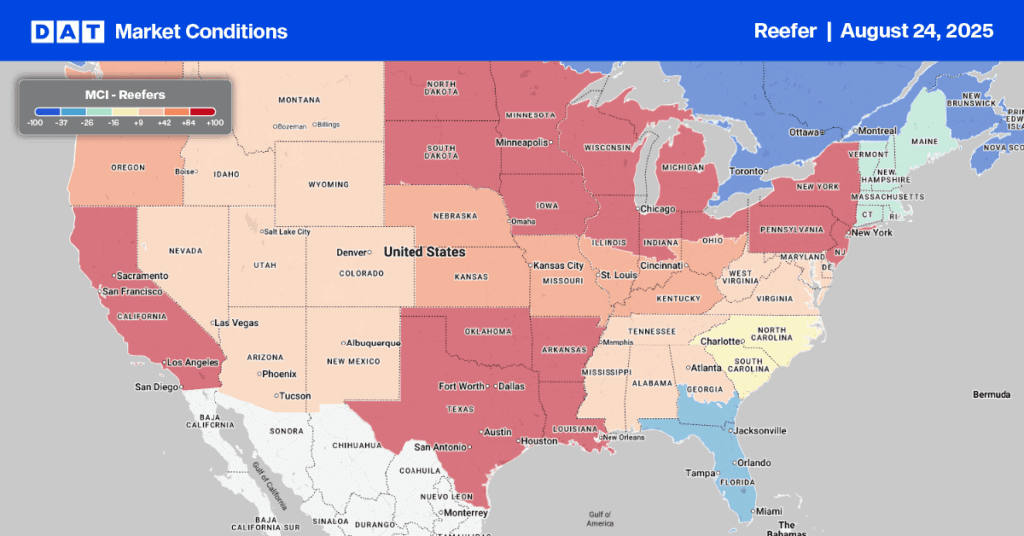
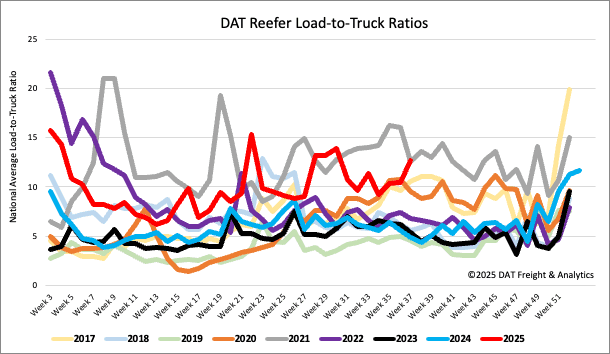
Recently, reefer area market volumes saw a substantial rise, rising 19 % week over week and an excellent 44 % year over year. This rise in demand, combined with a 2 % reduction in service provider tools articles, led to a 22 % boost in the reefer load-to-truck ratio, which currently stands at 12 71
Area rates
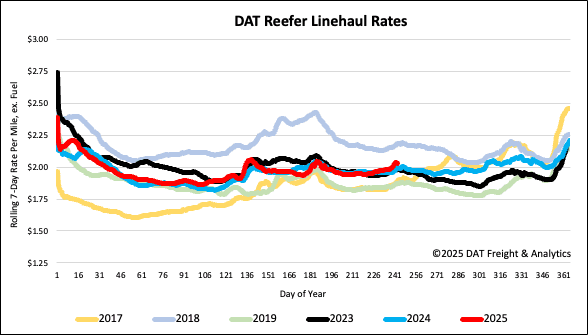
Labor Day weekend break brought a significant firm in reefer area capability, structure on the previous week’s 3 % rise in national lots motions. This caused a $0. 07 per mile rise in reefer rates, reaching simply over $ 2 04 per mile– a number $0. 04 greater than both in 2015 and 2023