Washington State is a national leader in icy red raspberry manufacturing, adding a remarkable 90 % of the nation’s supply. Each summer season, over 50 million pounds or virtually 1, 200 refrigerated truckloads of red raspberries are gathered in Lynden, Washington, specifically for cold.
Obtain the clearest, most accurate sight of the truckload industry with data from DAT intelligence.
https://www.youtube.com/watch?v=videoseries
Tune right into DAT intelligence Live, survive on YouTube or LinkedIn , 10 am ET every Tuesday.
Fresh-picked raspberries have a brief service life, losing flavor and nutrients quickly after concerning four hours. This is why Washington red raspberries are grown solely for freezing. Throughout harvest, maker pickers promptly move the berries at peak ripeness for instant cold. Within minutes, they are air-chilled and icy to secure their excellent sweet-tart flavor, vivid color, and antioxidant power.
A prime example of this dedication to high quality is the Rader Farms facility, where raspberries are rapidly chilled, sorted, cleaned, and afterwards frozen at their peak dietary worth. Unlike home cold methods, these raspberries are quickly moved right into freezing passages. In roughly eight mins, they are flash-frozen via intensely cool temperatures (deep into the downsides) and consistent rotation. This strategy makes certain the raspberries are iced up at their optimum perfection, while keeping their shape and avoiding them from sticking together.
Load-to-Truck Proportion
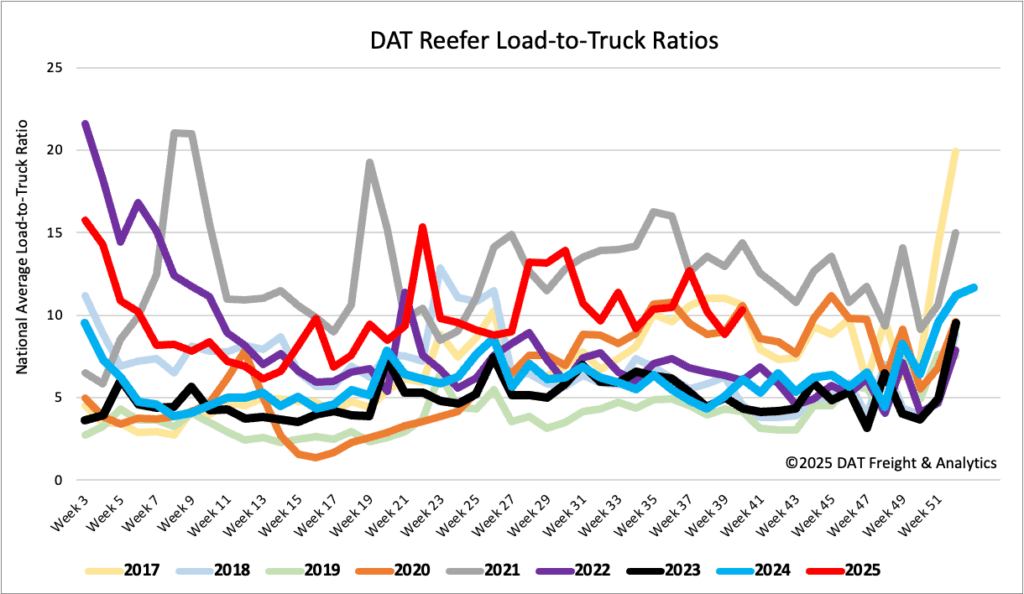
Last week, reefer load message quantities climbed by 4 %, noting a 44 % boost year-over-year. Despite this boost, quantities remained regular with the pre-pandemic average for Week 38 Simultaneously, a 11 % reduction in provider equipment posts brought about the reefer load-to-truck proportion working out at 10 02 for the week.
Area rates
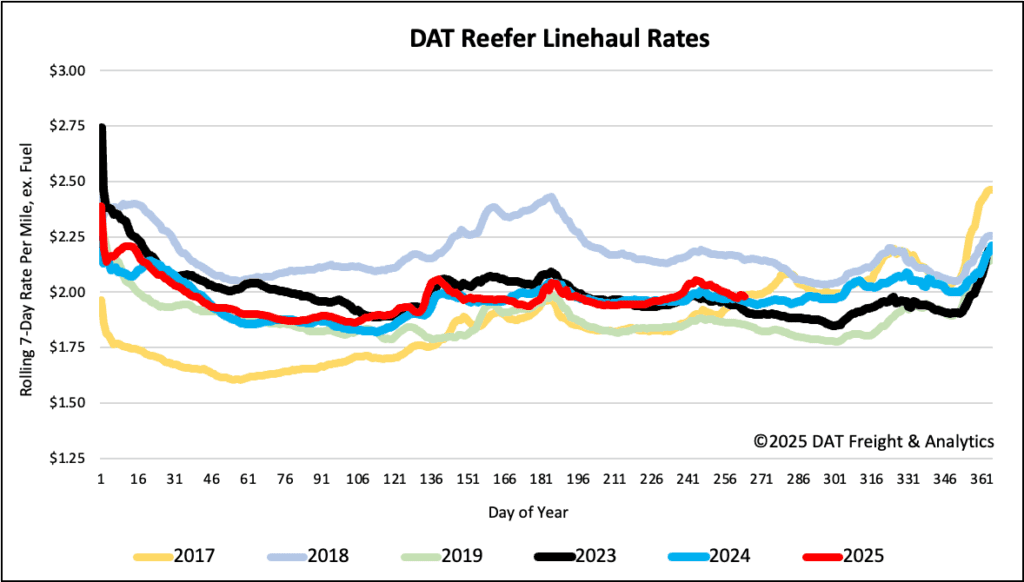
Nationally for all reefer temperature level zones, the 7 -day rolling standard for carriers dropped $0. 02/ mile to just under $ 2 00 per mile, noting a $0. 02 boost compared to the previous year.
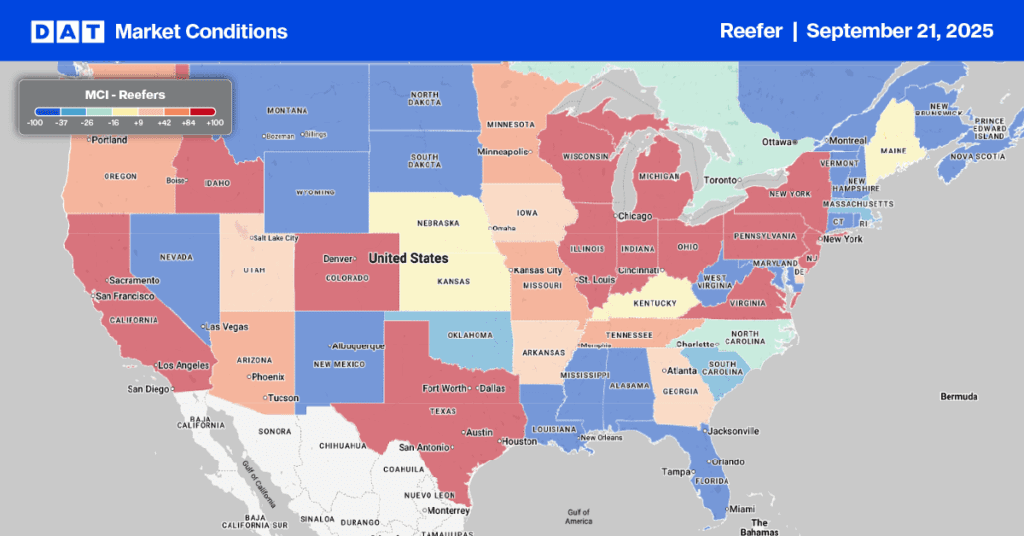
There was a shortage of vehicles in the Yakima Valley in the Pacific Northwest as Loss fruit and vegetables comes online last week. Providers to transport apples, pears, rhubarb and blueberries remained in high demand, with outbound loads paying $ 2 86/ mile, according to the USDA.
For all produce-specific loads, the USDA reported an ordinary price of $ 3 72 per mile, down $0. 05/ mile last week, for the week ending September 16, 2025