The 2025 potato period in Washington and Oregon is predicted to see a minor reduction in shipments despite a desirable harvest defined by great size and top quality, mainly as a result of reduced need for processed potato items. In Washington, the second-largest potato manufacturer in the U.S., property is anticipated to decline from 159, 500 acres in 2024 to in between 145, 000 and 150, 000 in 2025 Notably, just 10 % of the state’s potatoes are alloted to the fresh market, with essential growers like Del Christensen & & Sons and Norm Nelson Inc. anticipating regular harvest timetables and circulations mostly concentrated on retail.
Obtain the clearest, most exact sight of the truckload market with data from DAT iQ.
https://www.youtube.com/watch?v=videoseries
Tune into DAT intelligence Live, survive on YouTube or LinkedIn , 10 am ET every Tuesday.
In a similar way, Oregon, the fourth-largest potato producer, is encountering volume reductions tied to reduced processed potato property. The state produced 26 875 million cwt valued at $ 1 1 billion from 43, 000 acres in 2024, with around 5 – 10 % mosting likely to the fresh market. Remarkable growers such as Organically Grown Co. are concentrating on organic ranges amidst these patterns, with harvesting expected to start in late July and an emphasis on specialized potatoes together with a wide natural item offering.
Load-to-Truck Proportion
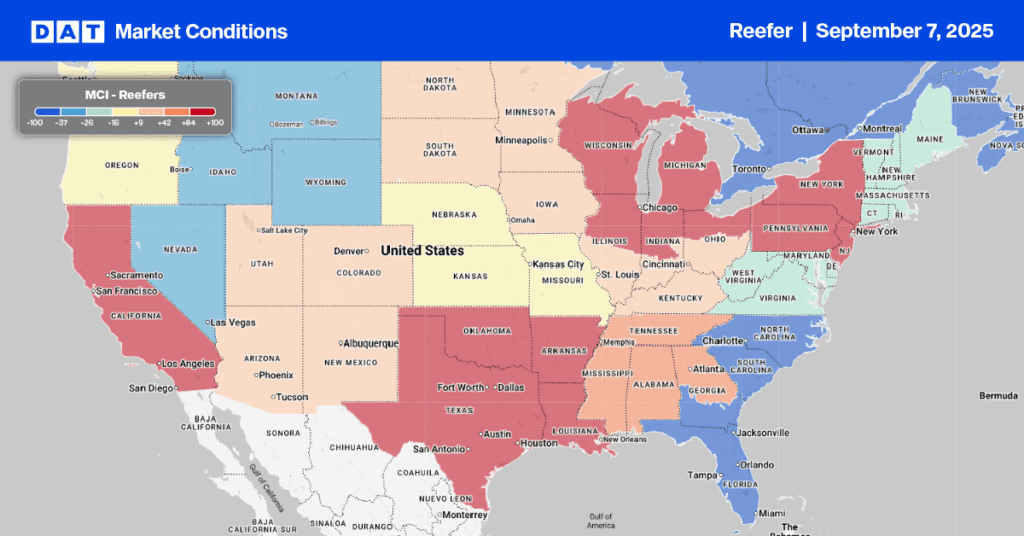
Last week, reefer volumes saw a predictable 26 % decrease after the Labor Day rise, mostly as a result of a 12 % decrease in nationwide truckload volume of vegetables and fruits. The reduced job week also brought about fewer carrier equipment messages, leading to the reefer load-to-truck ratio settling at 10 8 for the week. 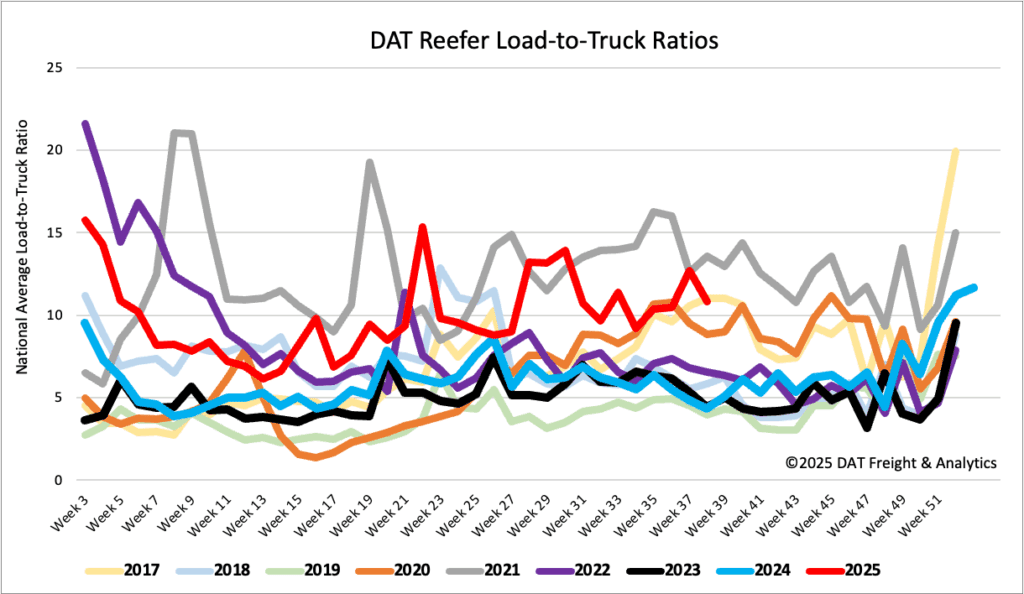
Spot rates
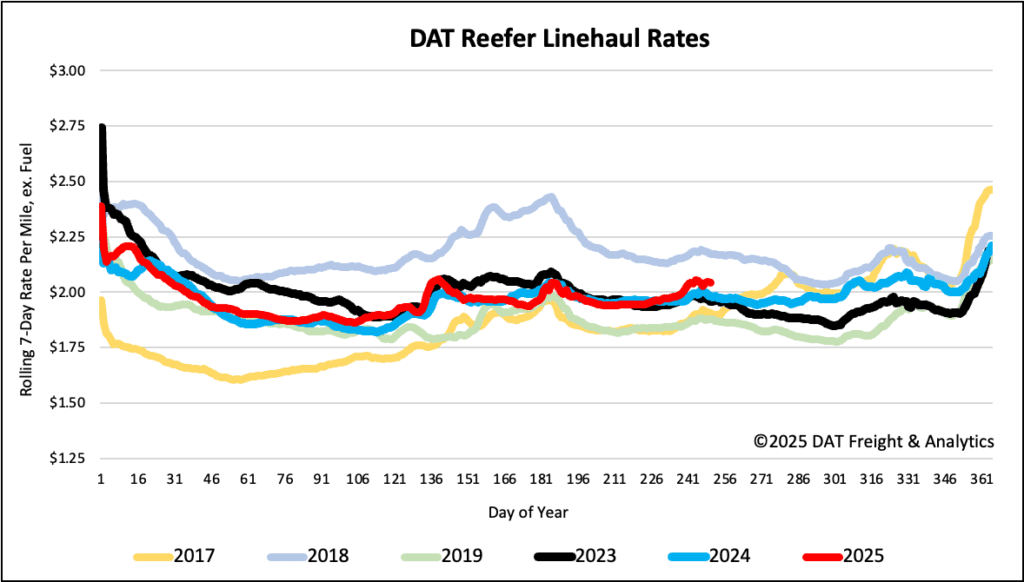
The combination of providers taking time off complying with the Labor Day weekend break, carriers continuing to leave the market, providers of all sizes lowering their fleet dimension, causing tighter capability last week in the area market. Area rates finished the week around $0. 07 per mile greater than the last 2 years, averaging $ 2 06 last week. We will certainly keep an eye on if this pattern lingers as the industry returns to complete procedure following week.